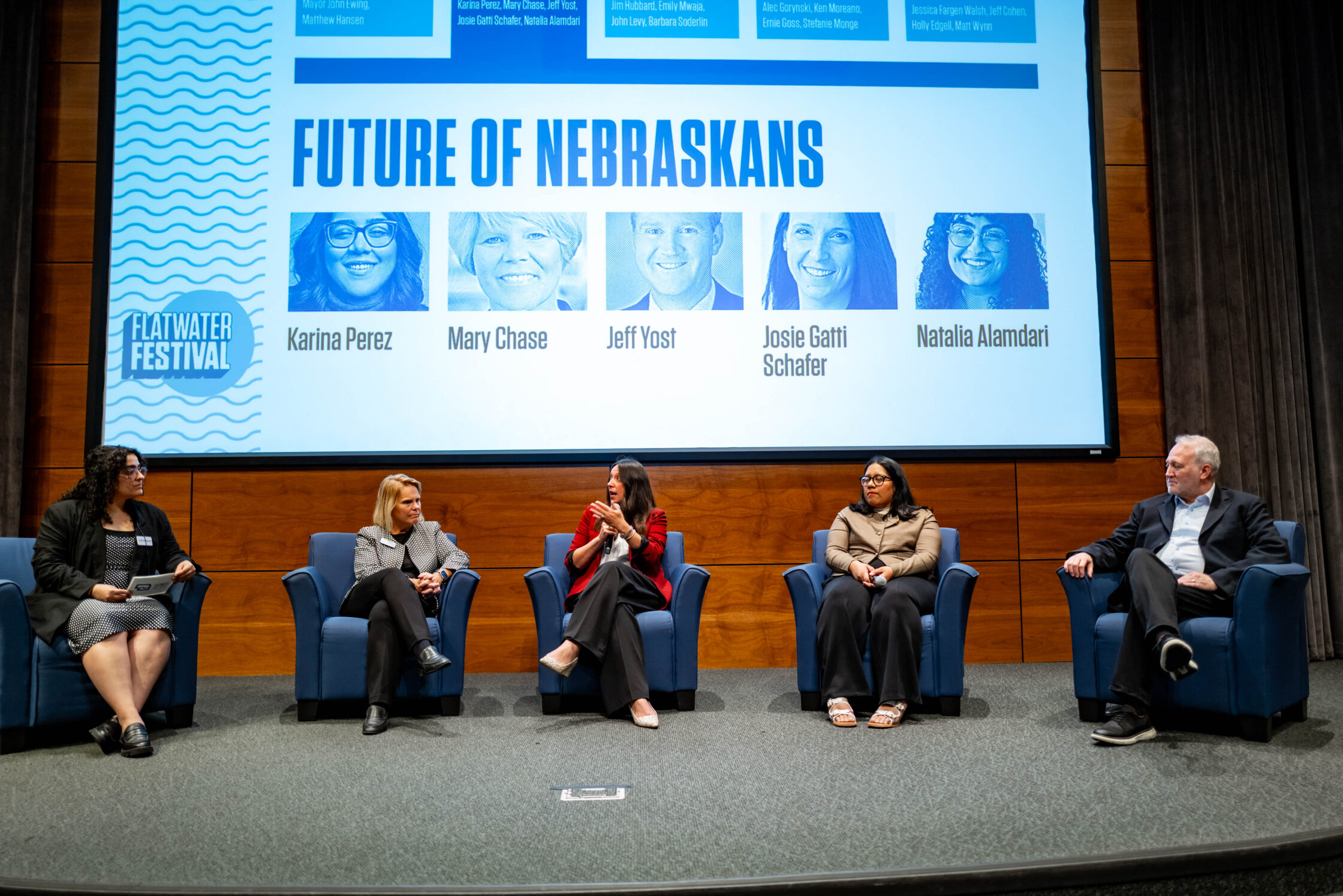
The narrative that Nebraska is not growing no longer holds up, according to four Nebraska researchers and community leaders who spoke during a panel discussion Wednesday in Omaha.
From 2010 to 2020, all 93 Nebraska counties — even those that experienced population decline — saw an increase in the number of people of color living there, the Flatwater Free Press reported. Every single county grew more diverse.
In that time, 24 counties — a quarter of the state — grew in population. Twenty-one of those counties were outside of the Omaha and Lincoln metro areas.
Experts and people involved in these communities joined together to discuss the “why” behind that growth and its implications during the Flatwater Free Press Festival Wednesday. The discussions gathered local leaders, policymakers and journalists to discuss the future of the state and the country.
“We say we’re not growing a lot, but we’re growing,” said Josie Gatti Schafer, director of the Center for Public Affairs Research at the University of Nebraska at Omaha. “We are just not growing evenly across the state.”
Schafer specifically attributed Nebraska’s population growth to international migration, including first-, second- and sometimes third-generation immigrants.
Columbus, a Nebraska city with a population of over 25,000, has seen a significant increase in its Hispanic and Latino populations, and in turn is transforming what its community looks like.
“A lot of these people come with big aspirations for why they migrated into our communities,” said Karina Perez, executive director of Centro Hispano in Columbus. “Being able to find opportunities and volunteers for that has really been key in keeping everything we need.”
Columbus is retaining residents, which has fostered the addition of over 36 new businesses in the last two years, Perez said.
Growth in the number of younger Nebraskans creates a challenge: getting them to stay. Educational institutions will have to meet workforce needs in both rural and metro areas to keep younger Nebraskans, said Mary Chase, vice provost for enrollment management at Creighton University in Omaha.
Chase said that 80% of Creighton’s students come from outside of Omaha, and 50% of them end up staying. Part of what Creighton does, Chase said, is teach widely applicable soft skills needed for any job.
“If we prepare our students with durable skills, they’ll be able to adapt and live with one foot ready to pivot and serve the needs of the places where they live,” Chase said.
That also requires creating the infrastructure in smaller communities to keep people there, said Jeff Yost, president and CEO of the Nebraska Community Foundation.
Yost said this is done by intentionally recruiting young people to be involved and listening to what they want to prioritize in their communities.
“Let’s have these conversations with them about what is meaningful, what is happiness, what is fulfillment,” Yost said. “I think lots of them will respond responsibly.”